
Peugeot Partner 1.9D, year
1999
The car was originally converted in january 2007 by a single tank system,
enabling it to run on Pure Plant Oil(PPO) or the fluent part of waste vegetable
oil(WVO). But a large proportion of collected WVO is very viscous or even solid
at ambient temperature - more so in the winter time. To use this part
of the WVO it is necessary to keep the WVO in a separate fuel tank, and to heat
the fuel tank, fuel hoses and the solenoid valves. Such a 2-tank system was
installed on this car in February 2009. The car drives in the North of Sweden.
|
Components for the
2-tank system for solid
or semi solid WVO: Function of the 2-tank
system: |
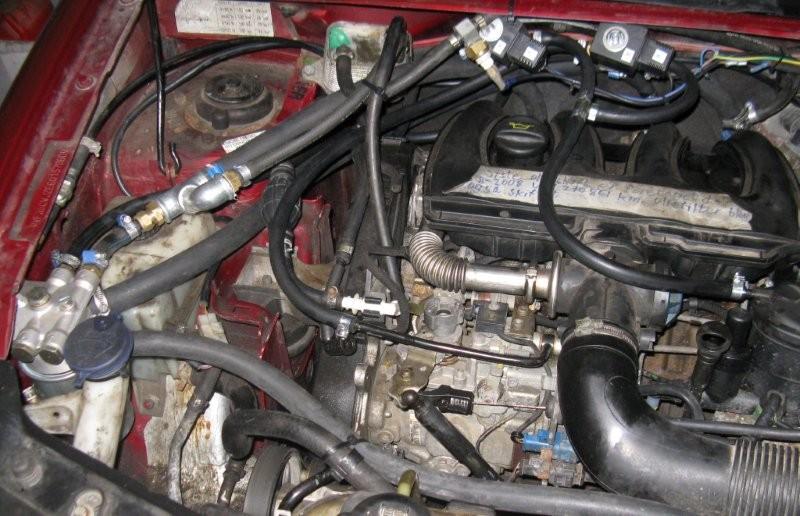
Heat exchanger and Solenoids are on the top of the photo. The WVO fuel filter is
to the left, and the diesel/PPO filter to the right.
(Point at the components to get hints)

Coolant heated WVO fuel filter. The WVO flows though our HIH system from the
tank to the fuel filter.
(Point at the components to get hints)
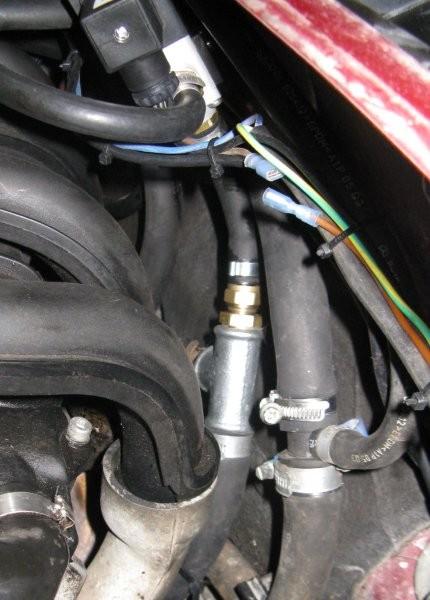
Return solenoid up and the return HIH in the middle, behind the eninge
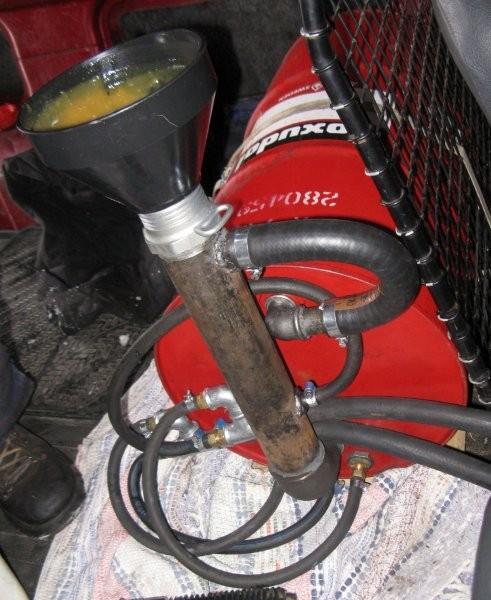
The WVO tank has been made from a 65 litres oil drum. The coolant from the HIH
system flows through a coil in the tank.
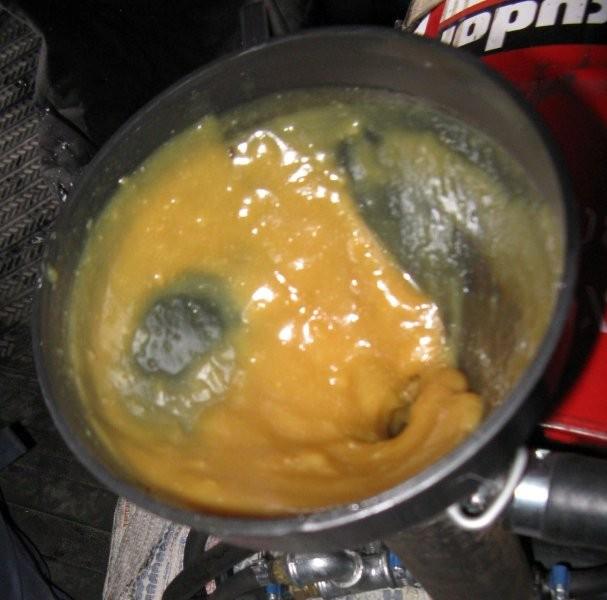
The WVO was too solid to flow into the tank, even the canister had been staying
in the boiler room all night . . .

. . . therefore a small part of it was heated . . .
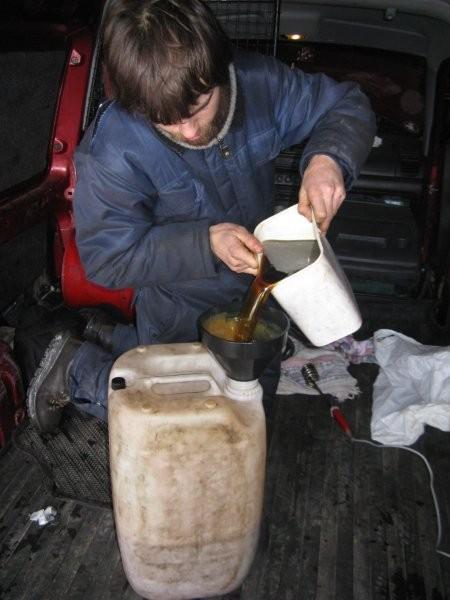
. . .and mixed with the solid part remaining in the canister. On the photo is
Peter, the owner of the car.
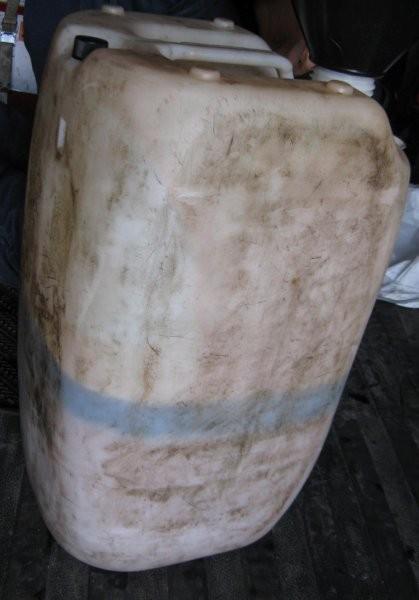
The solid WVO is still resting at the bottom of the canister with the hot fluent
part on the top.

After shaking the canister the high viscous mixture could flow into the tank.
Photo´s of the original 1-tank conversion for PPO.
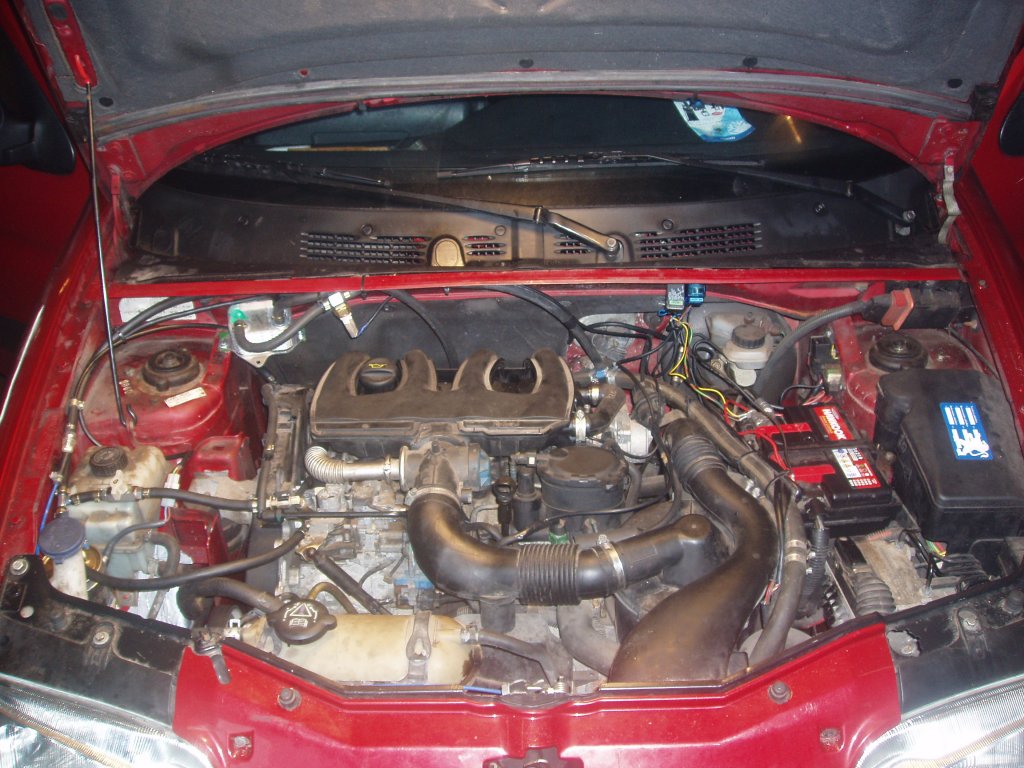

|
|
DAJOLKA,
Dalmosevej 2, DK-9330 Dronninglund, Danmark. Kontakperson:
Niels Ansø |
 |
